
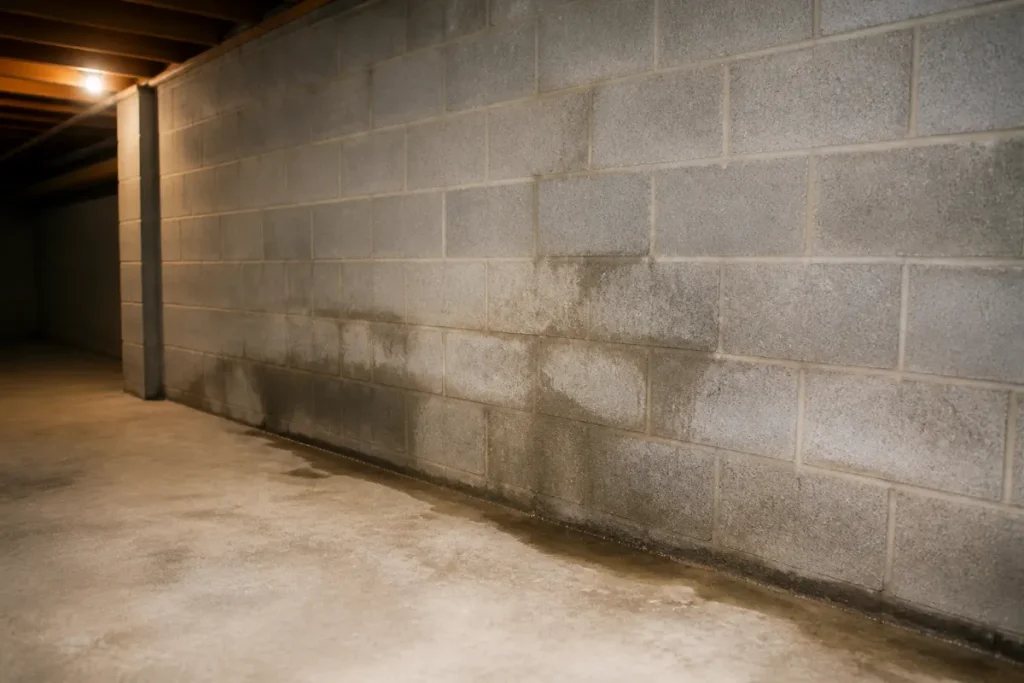
Finding water pooling along the edges of your basement floor after a storm is frustrating and stressful. If you notice water trickling in along the seam where your concrete floor slab meets the foundation wall, you are dealing with a cove joint leak.
This specific type of water intrusion is extremely common in homes across Pennsylvania. Unfortunately, many homeowners waste time and money attempting to patch this perimeter gap with waterproof paint, hydraulic cement, or caulk—only to watch the water return during the next heavy rain.
What Is the Cove Joint and Why Does It Leak?
To understand why water enters at this specific spot, it helps to understand how concrete foundations are constructed:
- Foundation Footings: Builders pour concrete footings deep below the frost line to support the building’s weight.
- Foundation Walls: Foundation walls—made of concrete block, poured concrete, or stacked stone—are built directly on top of the cured footings.
- Basement Slab: Finally, a concrete floor slab is poured inside the perimeter walls.
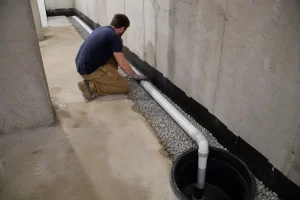
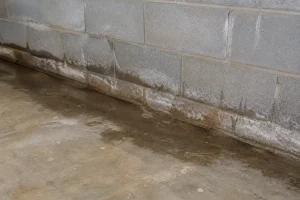
Because new concrete does not bond seamlessly to existing cured concrete, a thin perimeter seam remains where the floor meets the wall: the cove joint.
The Role of Hydrostatic Pressure
The primary cause of cove joint leaks isn’t a defect in your concrete floor—it is hydrostatic pressure. When heavy rain falls or winter snow thaws across Pennsylvania, the expansive clay soil surrounding your foundation becomes saturated.
Water weighs approximately 62.4 pounds per cubic foot. As thousands of gallons of rainwater accumulate in the soil around your footings, this trapped liquid exerts immense pressure against your basement walls and floor slab. Seeking the path of least resistance, this pressurized groundwater is forced UP through the unsealed cove joint seam and onto your floor.
Why DIY Quick-Fixes Always Fail
When water appears along floor seams, sealing the gap seems like a logical solution. However, surface sealers fail because they attempt to hold back water rather than manage it:
- Caulking and Hydraulic Cement: Sealing the top of the cove joint traps water inside the hollow cavities of block walls or under the floor slab. Continuous hydrostatic pressure will eventually blow out the caulk or force water higher up through wall pores.
- Waterproof Paints: Coatings applied to the interior face of a basement wall peel, bubble, and flake off when subjected to constant hydrostatic pressure from behind.
- Ignoring the Root Cause: You cannot block hydrostatic pressure with surface sealers—you must relieve the pressure and give the groundwater a controlled path away from your home.
The Permanent Solution: Sub-Slab Interior Drainage Systems
An interior perimeter French drain system is the most reliable, cost-effective method for permanently resolving cove joint seepage without disturbing your outdoor landscaping.
How an Interior French Drain System Works
- Perimeter Slab Trenching: A 12-inch border of the concrete floor slab is jackhammered and removed along the exterior foundation walls.
- Deep Trench Excavation: Soil is excavated down to the top of the foundation footing, creating a dedicated drainage channel below floor level.
- Perforated Drainage Pipe: Heavy-duty, perforated drain pipe surrounded by washed river stone is placed in the trench to intercept groundwater before it reaches floor level.
- Wall Vapor Barrier Integration: A dimpled plastic wall liner is attached to the base of the wall, channeling any internal wall dampness down into the sub-slab pipe.
- Slab Restoration: Fresh concrete is poured over the trench, restoring your basement floor smooth while leaving a hidden drainage pathway underneath.
- Sump Pump Evacuation: The perimeter pipe slopes toward a heavy-duty sump pit equipped with a pump that automatically discharges collected water away from your foundation.
Frequently Asked Questions
Will an interior French drain lower my home’s property value?
No. A professionally installed interior drainage system with a transferable warranty protects your foundation, eliminates mold risks, and increases property value by resolving a major red flag for prospective home buyers.
How long does it take to install an interior French drain?
Most residential interior French drain systems can be excavated, piped, re-concreted, and connected to a sump pump in just 1 to 2 days with minimal disruption to your home.
Do I need a battery backup sump pump with my French drain?
Highly recommended. Torrential rains in Pennsylvania are frequently accompanied by power outages. A battery backup pump ensures your drainage system continues discharging groundwater even if electrical power cuts out.
Tired of mopping up water every time it rains?
Stop masking the problem with temporary surface sealers. Contact Dustin Randolph at Dryhaven Waterproofing today for an honest, direct-owner evaluation and a permanent interior drainage solution.