
Finding water along the edge of your basement floor after heavy rain can be confusing. The walls may look dry higher up, no plumbing leak may be visible, yet water continues appearing exactly where the basement floor meets the wall.
This area is commonly known as the cove joint. When water enters through or near this seam, it may spread around the basement perimeter, soak stored belongings, damage finished materials, and create persistent dampness.
For homeowners in Pittsburgh and surrounding Western Pennsylvania communities, seasonal rain, snowmelt, grading, drainage, and groundwater conditions can all influence basement moisture. Understanding why water is leaking between the basement floor and wall is the first step toward selecting an appropriate solution.
What Is the Basement Cove Joint?
In many homes, the foundation walls and basement floor are constructed separately. The footing is placed first, the foundation walls are built or poured above it, and the basement floor slab is added later.
The seam where the floor slab meets the foundation wall is called the cove joint or floor-to-wall joint.
This construction joint is not automatically a defect. Most basements have some form of floor-to-wall transition. However, when moisture collects around or beneath the foundation, the joint can become one of the easiest places for water to enter the basement.
Water may emerge directly from the seam or travel through surrounding masonry before appearing at the floor’s edge. Because the visible water does not always reveal its original source, an on-site inspection is often needed to identify the contributing conditions.
Why Does Water Leak Between the Basement Floor and Wall?
Several conditions can contribute to water entering near the basement perimeter.
Hydrostatic Pressure
Hydrostatic pressure develops when water collects in the soil around or beneath a foundation. As the ground becomes saturated, that water can press against foundation walls and upward beneath the basement floor.
The cove joint may provide a path for that moisture to enter. Water can then appear as dampness, trickling, or puddles along the perimeter of the floor.
Hydrostatic pressure is a common possibility, but it is not the only explanation. Plumbing leaks, condensation, grading problems, roof runoff, foundation cracks, or other drainage conditions can sometimes produce similar symptoms.
Heavy Rain and Snowmelt
Extended rainfall or rapidly melting snow can increase the amount of water surrounding a home. When the ground cannot absorb or redirect that moisture efficiently, more water may collect near the foundation.
A basement that stays dry during normal weather but leaks during prolonged storms may have a drainage or groundwater problem that becomes noticeable only when moisture levels rise.
Poor Exterior Grading
The ground around a home should generally direct surface water away from the foundation. Low areas, settled backfill, or landscaping that slopes toward the house can allow rainwater to collect near basement walls.
Correcting grading may help reduce the amount of surface water reaching the foundation, although it may not resolve water already collecting beneath the floor.
Gutters and Downspouts
Clogged gutters, overflowing roof edges, damaged downspouts, or short downspout extensions can release large amounts of water near the foundation.
Before assuming the problem is entirely below ground, check whether roof runoff is being carried away from the house. Improving gutter and downspout drainage may reduce one source of excess moisture.
Foundation Wall or Floor Cracks
Water may travel through a crack in the foundation wall or floor and then move toward the basement perimeter. In other cases, moisture can enter through porous masonry and collect near the cove joint.
The place where water becomes visible is not always the exact point where it entered the foundation.
Signs the Water May Be Related to Groundwater Pressure
No single symptom provides a complete diagnosis, but the following patterns may suggest that groundwater or drainage conditions are contributing to the leak:
- Water appears during or after prolonged rain or snowmelt.
- Dampness develops along multiple sections of the basement perimeter.
- Water enters from both the floor-to-wall joint and cracks in the slab.
- White mineral deposits, known as efflorescence, appear near the bottom of masonry walls.
- Paint or coatings bubble, peel, or flake near the floor.
- Water continues appearing after the rain has stopped.
- The basement has recurring moisture even after gutters and downspouts have been corrected.
A professional inspection can help distinguish groundwater seepage from plumbing leaks, condensation, surface runoff, or another source.
Can Caulk or Hydraulic Cement Stop a Cove Joint Leak?
Applying caulk, hydraulic cement, waterproof paint, or another surface coating may seem like a quick solution. These products can be useful in certain situations, but they do not remove water from the soil surrounding or beneath the foundation.
If groundwater pressure is contributing to the leak, sealing the visible seam may cause moisture to find another path. Water may reappear beside the patch, through a nearby crack, or higher along the wall.
Concrete and masonry also respond to changes in temperature, moisture, and movement. A rigid surface patch may separate or crack if the surrounding materials continue moving.
The appropriate repair depends on the source of the water. That is why the first objective should be identifying how moisture reaches the basement rather than simply covering the place where it becomes visible.
How an Interior French Drain Can Help Manage Cove Joint Water
When groundwater or perimeter seepage is contributing to the problem, an interior French drain system may be considered as part of the solution.
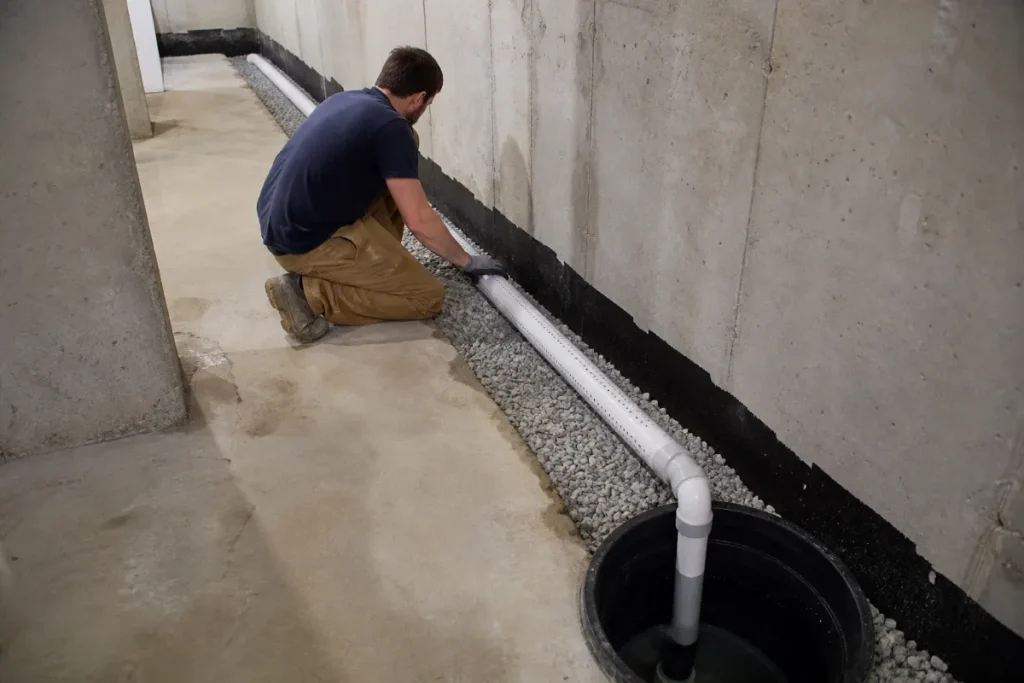
An interior drainage system is installed below or beside the basement floor perimeter. Instead of trying to block groundwater after it reaches the cove joint, the system collects and redirects water before it spreads across the floor.
A typical installation may involve:
- Opening a section of the floor perimeter: A narrow portion of the concrete slab is removed near the foundation wall.
- Creating a drainage channel: Space is prepared beside the footing to collect water around or beneath the slab.
- Installing drainage materials: Perforated drainage pipe and clean aggregate may be placed within the channel.
- Managing wall seepage: Water moving down the foundation wall can be directed toward the drainage system.
- Routing collected water: The system carries water toward an appropriate collection and discharge point.
- Restoring the floor: The opened section is repaired to create a finished surface around the basement perimeter.
The exact design should be based on the home’s construction, the source of the moisture, and the conditions observed during the inspection.
For homes with multiple water-entry points, a broader basement waterproofing solution may combine drainage and moisture-management measures tailored to the property.
What Should You Check Before Scheduling an Inspection?
Before contacting a waterproofing professional, a few observations can help clarify when and where the problem occurs:
- Note whether the water appears during rain, after snowmelt, or during dry weather.
- Check gutters and downspouts for overflow or damage.
- Look for low spots or soil sloping toward the foundation.
- Inspect visible plumbing lines and nearby appliances.
- Photograph the affected area during active seepage.
- Record whether water appears in one location or around several walls.
- Note any cracks, efflorescence, peeling paint, or damp masonry.
These observations can help the contractor understand the pattern, but they should not be used to select a repair system without evaluating the home.
When Should You Request a Professional Basement Inspection?
Consider scheduling an inspection when:
- Water repeatedly enters where the basement floor meets the wall.
- Puddles develop along the basement perimeter.
- Stored belongings, drywall, flooring, or insulation are becoming damp.
- The basement has persistent musty odors or visible moisture.
- Water appears through both the cove joint and floor cracks.
- Surface patches or waterproof coatings have failed.
- You plan to finish the basement and want to address moisture first.
- You cannot determine whether the water comes from groundwater, drainage, condensation, or plumbing.
Recurring basement water should be evaluated before installing finished walls, flooring, or other materials that could conceal the affected area.
Pressure-Free Guidance for Western Pennsylvania Homeowners
Water leaking between the basement floor and wall does not have one universal cause or solution. The appropriate response depends on the home’s drainage, grading, foundation construction, water-entry pattern, and surrounding conditions.
Dryhaven Waterproofing is based in Hutchinson, Pennsylvania, and serves homeowners in Pittsburgh and surrounding Western Pennsylvania communities. Our team provides honest, practical evaluations without high-pressure sales tactics or unnecessary recommendations.
If you are seeing water around your basement perimeter, contact Dryhaven Waterproofing to request a free, pressure-free inspection.
Frequently Asked Questions About Cove Joint Leaks
What causes water to leak between a basement floor and wall?
Water may enter through the cove joint when groundwater collects around or beneath the foundation. Hydrostatic pressure, heavy rain, snowmelt, poor grading, roof runoff, cracks, or drainage problems can contribute. An inspection can help identify which conditions are affecting the home.
Is water at the cove joint always caused by hydrostatic pressure?
No. Hydrostatic pressure is one possible cause, but plumbing leaks, condensation, wall cracks, floor cracks, poor grading, and misdirected roof runoff can produce similar symptoms. The timing, location, and pattern of the moisture should be evaluated before selecting a repair.
Can I seal a cove joint leak with caulk or hydraulic cement?
A surface patch may temporarily cover the visible seam, but it will not remove groundwater from around or beneath the foundation. If pressure or ongoing moisture is present, water may eventually return through the patch or find another entry point.
How does an interior French drain help with cove joint water?
An interior French drain collects water near or below the basement floor perimeter and redirects it toward a controlled collection and discharge point. This can help manage groundwater before it spreads through the cove joint and across the basement floor.
Does a cove joint leak mean the foundation is structurally damaged?
Not necessarily. Cove joint seepage is often a water-management issue, but the surrounding foundation should still be inspected for cracks, bowing, displacement, or other signs of movement. The presence of water alone does not provide a complete structural diagnosis.
Why does my basement leak only after heavy rain?
Heavy or prolonged rain can saturate the soil and raise moisture levels around the foundation. If drainage is limited, water may press against basement walls or collect beneath the slab until it reaches a joint, crack, or other opening.
Can grading and downspout improvements stop basement perimeter leaks?
Improving grading, gutters, and downspouts can reduce surface water near the foundation and may help with some leaks. However, these measures may not resolve groundwater collecting beneath the basement floor. The correct approach depends on the source of the water.
When should I call a basement waterproofing professional?
Request an inspection when the leak recurs, water reaches finished materials or stored belongings, surface patches fail, or you cannot identify the source. It is also wise to evaluate moisture before finishing or remodeling the basement.